Fascial Fitness
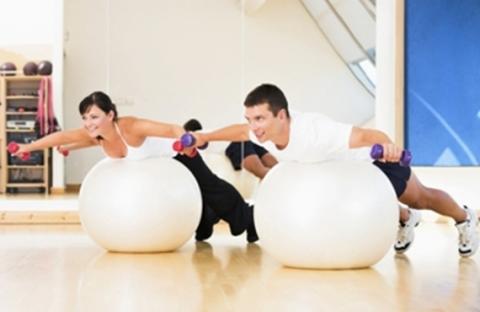
Variety is not only the spice of life, it is necessary with regard to functional training and "fascial fitness". When we train our muscles we concurrently train our fascial system. If we train the same systems using the same movement patterns with the same levels of effort, intensity, duration etc, we train our tissues in a very narrow and limited range. For example, someone who's sole exercise is running will place a narrow range of demands on their myofascial system. They may be "fit", but they are fit for running only.
Our bodies need varied training stimulus in the form of varied, complex movements to achieve our fascial fitness potential. By all means keep running, doing yoga or weight training. The take home message is to keep challenging your body in many different ways to keep it happy. Thomas Myers, an author of numerous studies and books on the topic of fascia has this to write about the topic of fascial health and training:
Fascia: you’re hearing about it more and more, and for good reason. Consciously or unconsciously, you have been working with fascia—connective tissue—for your whole movement career. It is unavoidable. Now, however, new research is reinforcing the importance of fascia in functional training (Fascia Congress 2009). Fascia is much more than “plastic wrap around the muscles.” It is the organ system of stability and mechano-regulation. The evidence all points to a new consideration within overall fitness—hence the term fascial fitness. Understanding the importance of fascia gives rise to exciting new questions:
- Most injuries are connective-tissue (fascial) injuries, not muscular injuries—so how do we best train to prevent and repair damage and build elasticity and resilience into the system?
- There are 10 times more sensory nerve endings in fascia than in muscles—so how do we aim proprioceptive stimulation at the fascia as well as the muscles?
- Traditional anatomy texts of the muscles and fascia are inaccurate, based on a fundamental misunderstanding of our movement function—so how do we work with fascia as a whole, as the “organ system of stability”?
How to Train the Neuromyofascial Web
How can we train this system, in conjunction with our work on muscles and neural control, to prevent and repair injury and build resilience into the system?
The answer to this question is still developing—rapidly—both in the laboratory and on the training floor. Some research is confirming our images and practices as they have developed and are traditionally applied. Here we focus on surprising research that is (or soon will be) changing our ideas of how the neuromyofascial web really works and what role connective tissue plays in developing overall fitness for life.
Finding #1: The fascial system responds better to variation than to a repetitive program.
The evidence suggests that the fascial system is better trained by a wide variety of vectors--in angle, tempo and load (Huijing 2007). Isolating muscles along one track (e.g., with an exercise machine) may be useful for those muscles but is less than useful for all the surrounding tissues. Loading the tissue one way all the time means it will be weaker when life--which is rarely repetitive--throws that part of the body a curve ball.
What’s In:
- Whole-Body Movements. Engaging long myofascial chains and whole-body movements is the better way to train the fascial system.
- Proximal Initiation. It’s best to start movements with a dynamic prestretch (distal extension) but accompany this with a proximal initiation in the desired direction, letting the more distal parts of the body follow in sequence, like an elastic pendulum.
- Adaptive Movement. Complex movement requiring adaptation, like parkour (see the beginning of the James Bond movie Casino Royale for a great example), beats repetitive exercise programs.
What’s Out:
- Repetitive Movement. Machines (or minds) that require clients to work in the same line again and again do not build fascial resilience very well.
- Always Practicing With Upper-Level Loads. Variable loads build different aspects of the fascia. Sticking with near-limit loads will strengthen some ligaments but weaken others. Varying the load is the better way.
- Always Training in the Same Tempo. Likewise, varying the tempo of your training allows different fascial structures to build strength and elasticity.
For more research findings on fascia, along with in-depth analysis of what the findings mean for personal training, please see “Fascial Fitness: Training in the Neuromyofascial Web” in the online IDEA Library or in the April 2011 issue of IDEA Fitness Journal.

Recent Posts
- A Father's Health and Fertility; what we pass on to the next generation
- Will we see a ripple effect in fertility funding in British Columbia after the recent proposal of legislation in the U.S.?
- NEW clinic look!
- Mindful or Mind-full
- Holiday Goodies (without the guilt)
- What Not to Say (to anyone struggling with fertility)
- Your Flip Flops Are Trying To Kill You!
- Christopher's Top Blogs For Health and Fitness
- Happy Chinese New Year!
- House Plants and Health
Young Heaven - Naked Teens &
<a
Sexy photo galleries, daily
Free Porn Galleries - Hot Sex
New project started to be
Post new comment